Overlay: A Study in Time, Place and Pattern
My time with Malcolm Appleby stretched from one season into another. I began my journeys to Highland Perthshire in the spring, when the trees were still beginning to wake, and continued through the emerging leaves and into summer. Looking back, the changing landscape became part of the experience of learning — the same roads travelled back and forth between my home in Dumfriesshire and Malcolm’s workshop near Aberfeldy, but never quite the same view twice.
The drive itself could easily have been thought of as wasted time. Instead, it became some of the most useful thinking time I’ve had in a long while. There is something about travelling repeatedly, with a playlist or an audiobook on, that allows your mind to wander. Away from the bench, away from the demands of the atelier, ideas have space to form and connect. By the time I arrived, I often felt that I had already been working things through in my head.
I was staying in a place with huge windows looking out onto trees and sky, surrounded by woods. I have always loved being in the woods. I grew up surrounded by trees, and they have always felt like places to retreat into. On a rainy day the canopy protects you from the worst of it; on a hot day it gives you shade. There is the ambient sound of birds, the layers of leaves and branches, feathers on the forest floor, and an extraordinary amount of activity happening all around you.
The woods are busy places. They are full of pattern and repetition, but also disorder and chance. Branches overlap, leaves obscure what is behind them, light breaks through in fragments. There is density and chaos, but somehow it all works together. I found myself looking at the trees differently as the weeks went on, noticing the patterns and the way light moved across them.
Malcolm’s home and workshop had something of this same quality. It was layered and busy, filled with collected tools, books, images and stories. There was evidence everywhere of a lifetime spent looking, making, experimenting and learning.
I can be very driven by pattern and order in my own work. Malcolm talked about the idea of ‘unteaching’ me — encouraging me to loosen my grip on some of that control. One day he made marks on a piece of metal with a chainsaw and was completely excited by the result. It was almost the antithesis of my own controlled approach to making.
I’m never going to be that person. It simply isn’t in my nature. But I wanted to absorb a little of what Malcolm was showing me: the possibility of allowing something less controlled into the work. Not abandoning my own visual language, but finding ways to let pattern and order sit alongside something more instinctive and unexpected.
This ring grew from that idea.
I wanted to make something connected to the place where I had learned this new skill, but also to the place I had travelled from. A piece that held the experience of being there, the journeys between the two places, and the time spent working in both Malcolm’s workshop and my own atelier.
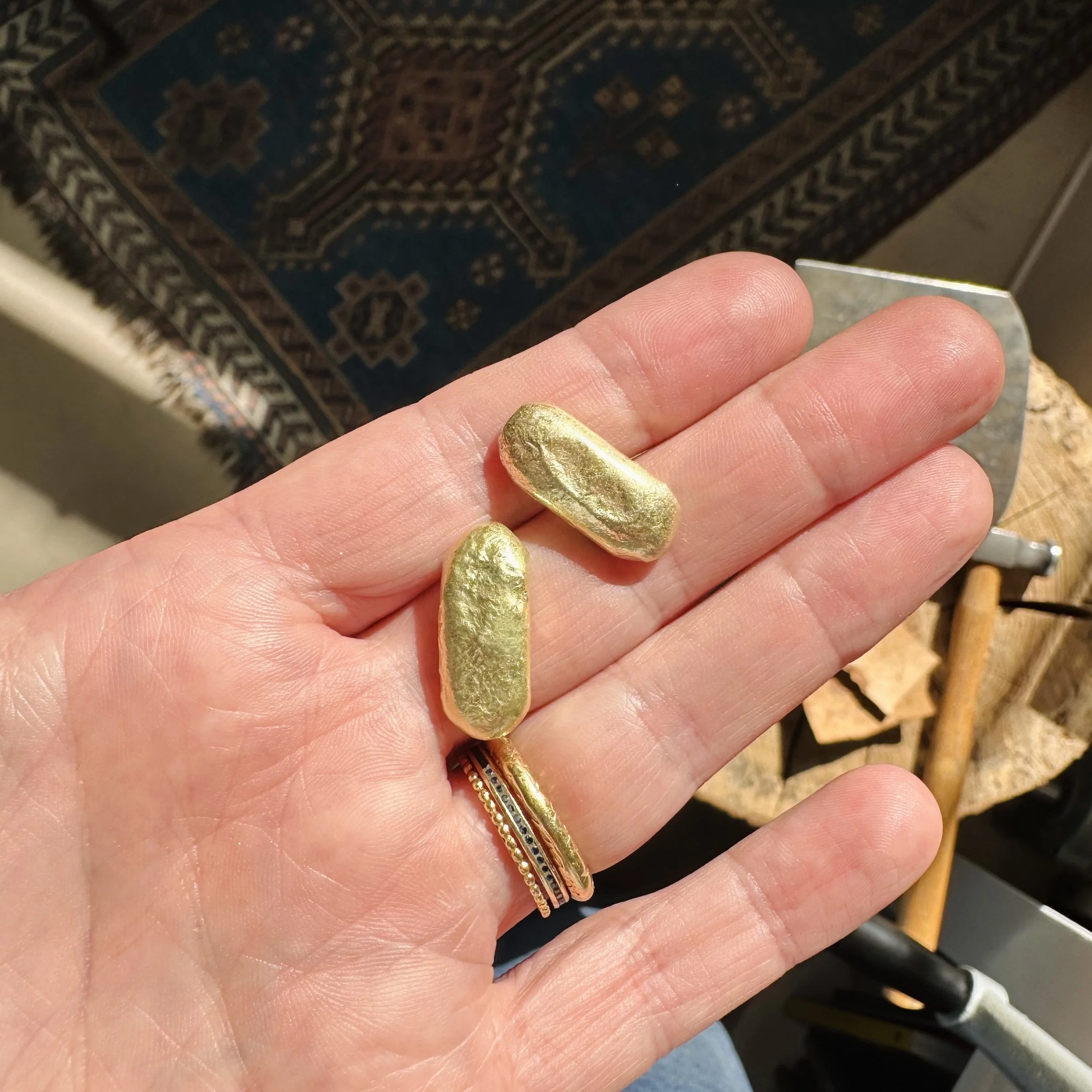
That was where the idea of using Scottish panned gold finally came from.
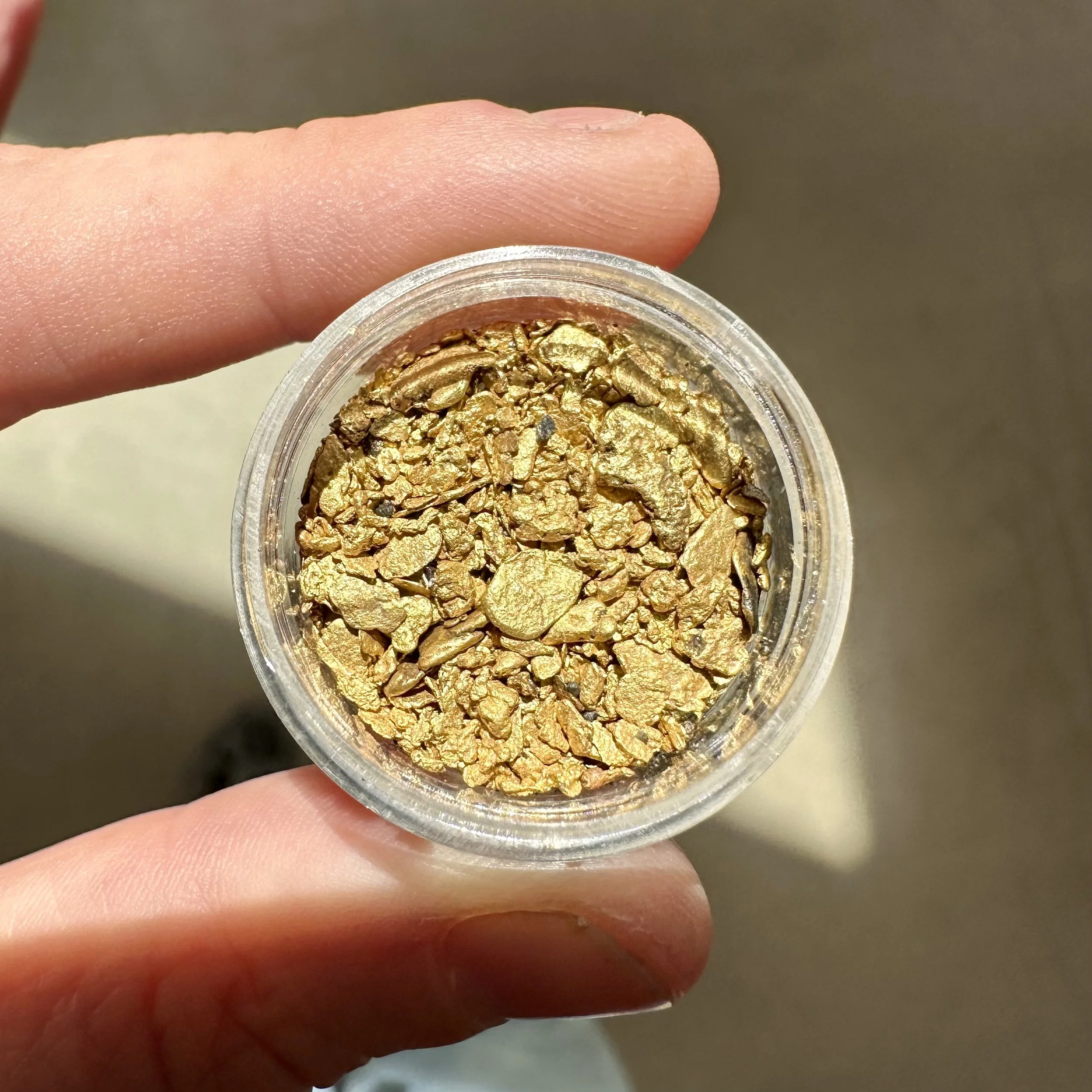
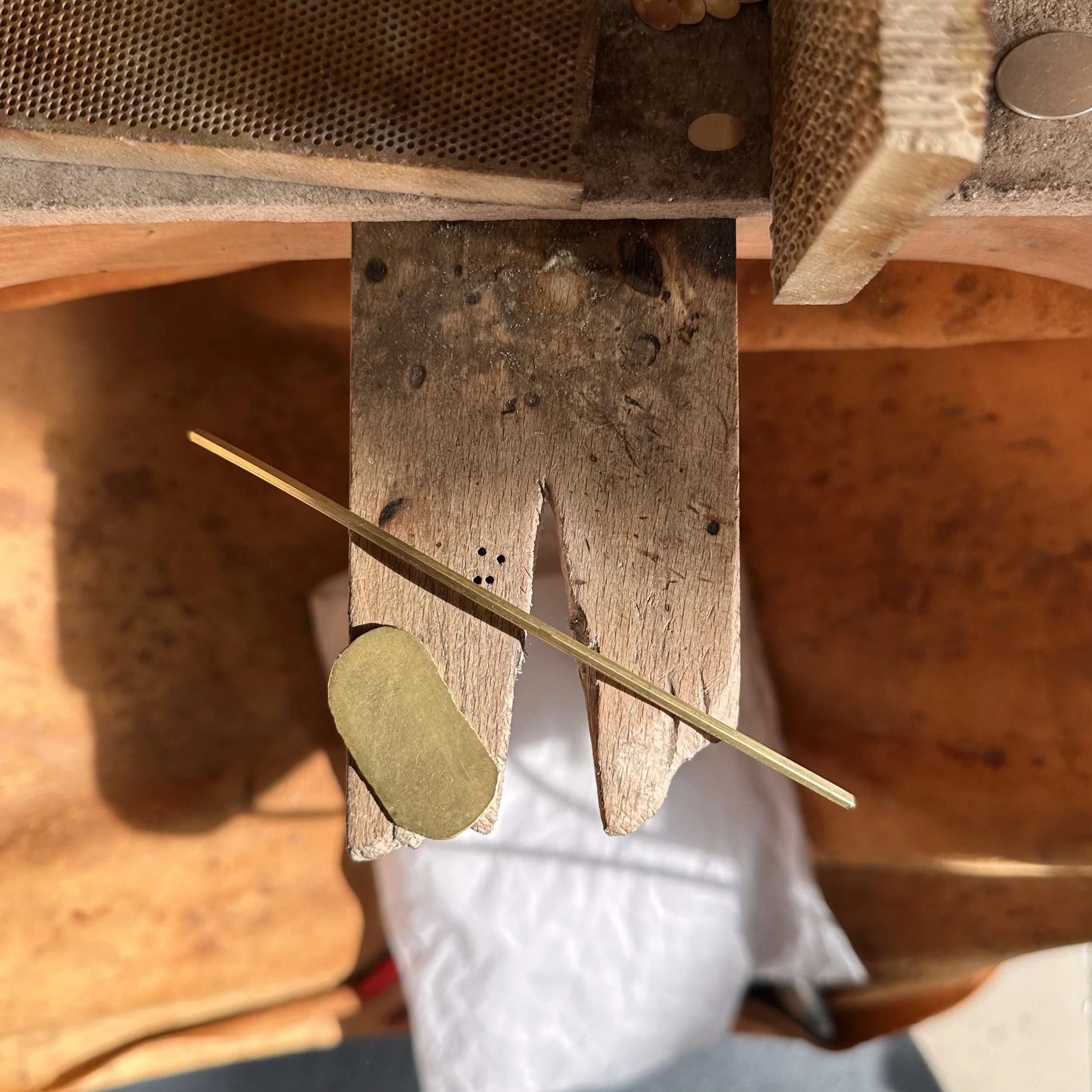
The gold comes from river beds in Perthshire and Aberdeenshire, arriving at the atelier as irregular flakes, each beautiful in its own right. Panning for gold is a painstaking process and certainly not one I have mastered, although I would love to try it one day. For this piece, the gold was refined to remove impurities before I carefully alloyed it to create the right balance of strength and malleability. From there, the ingot was rolled and drawn into the wire and sheet I needed to build the ring.
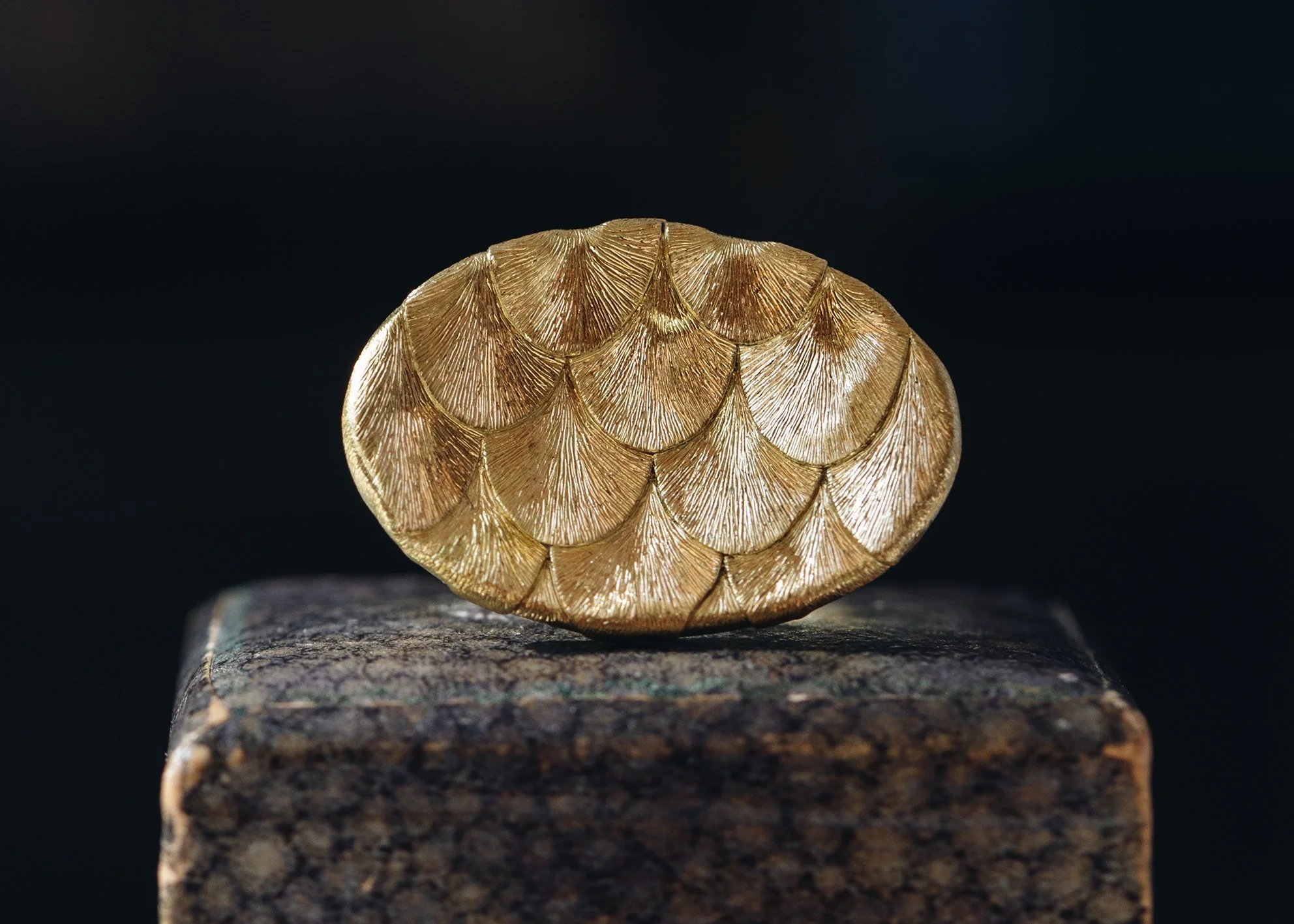
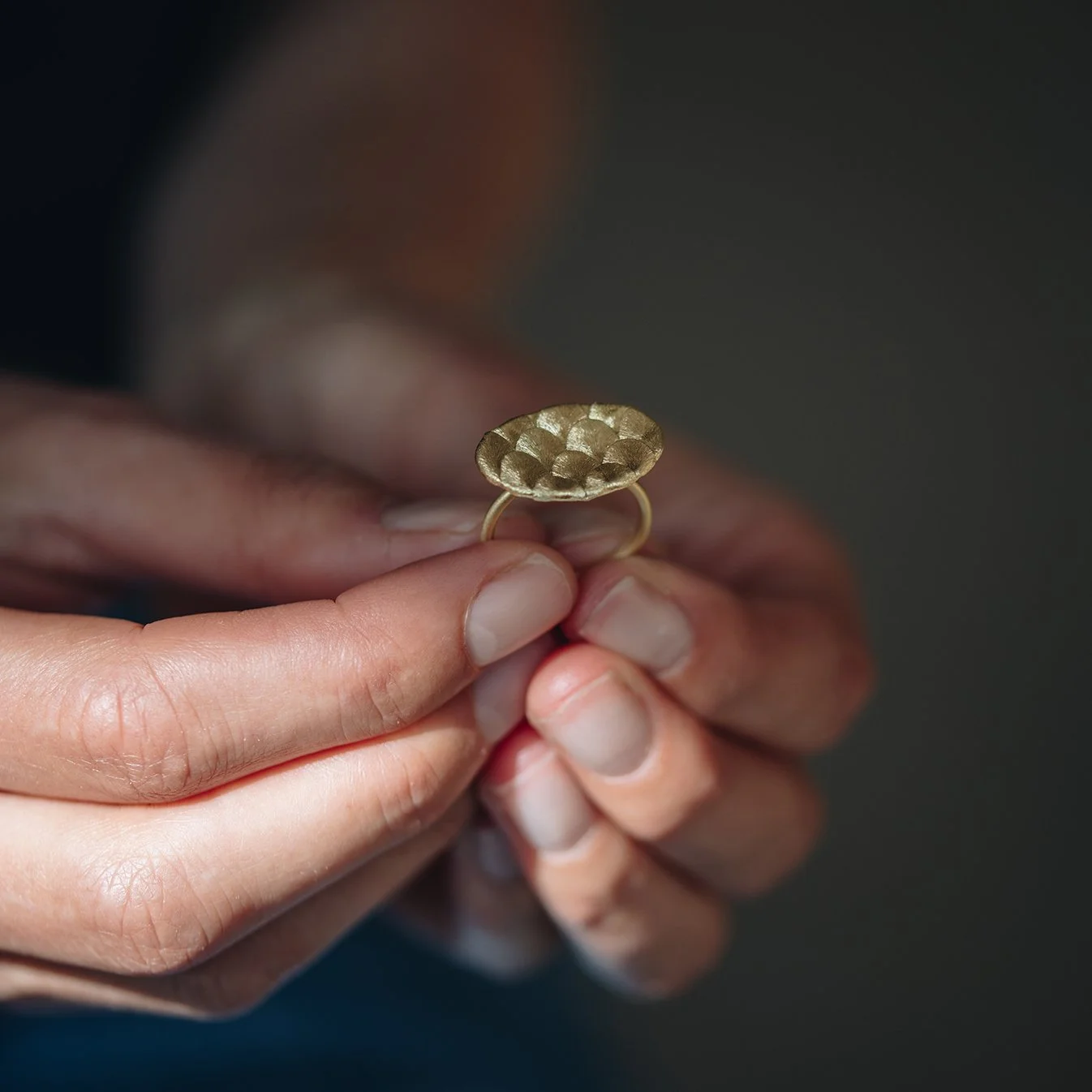
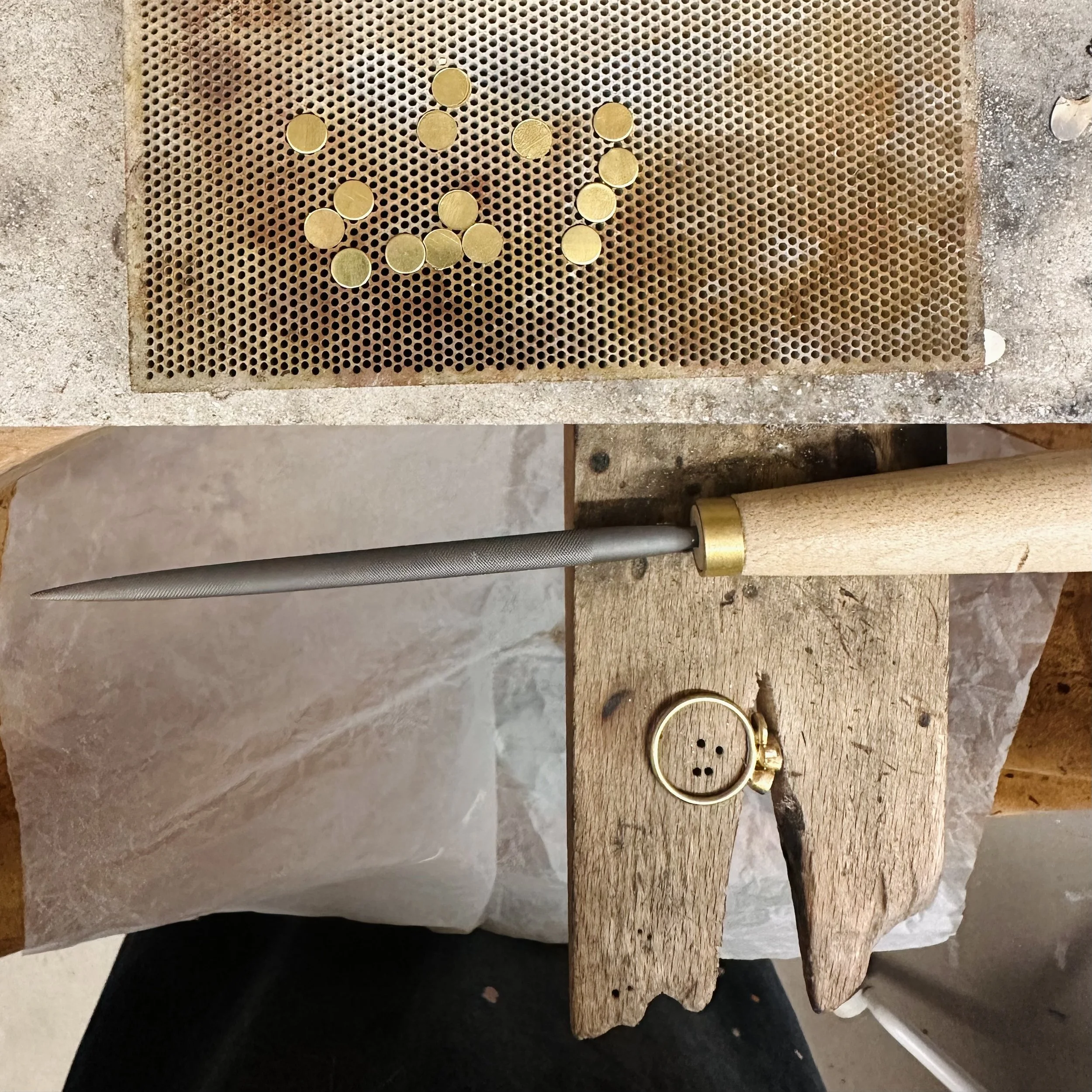
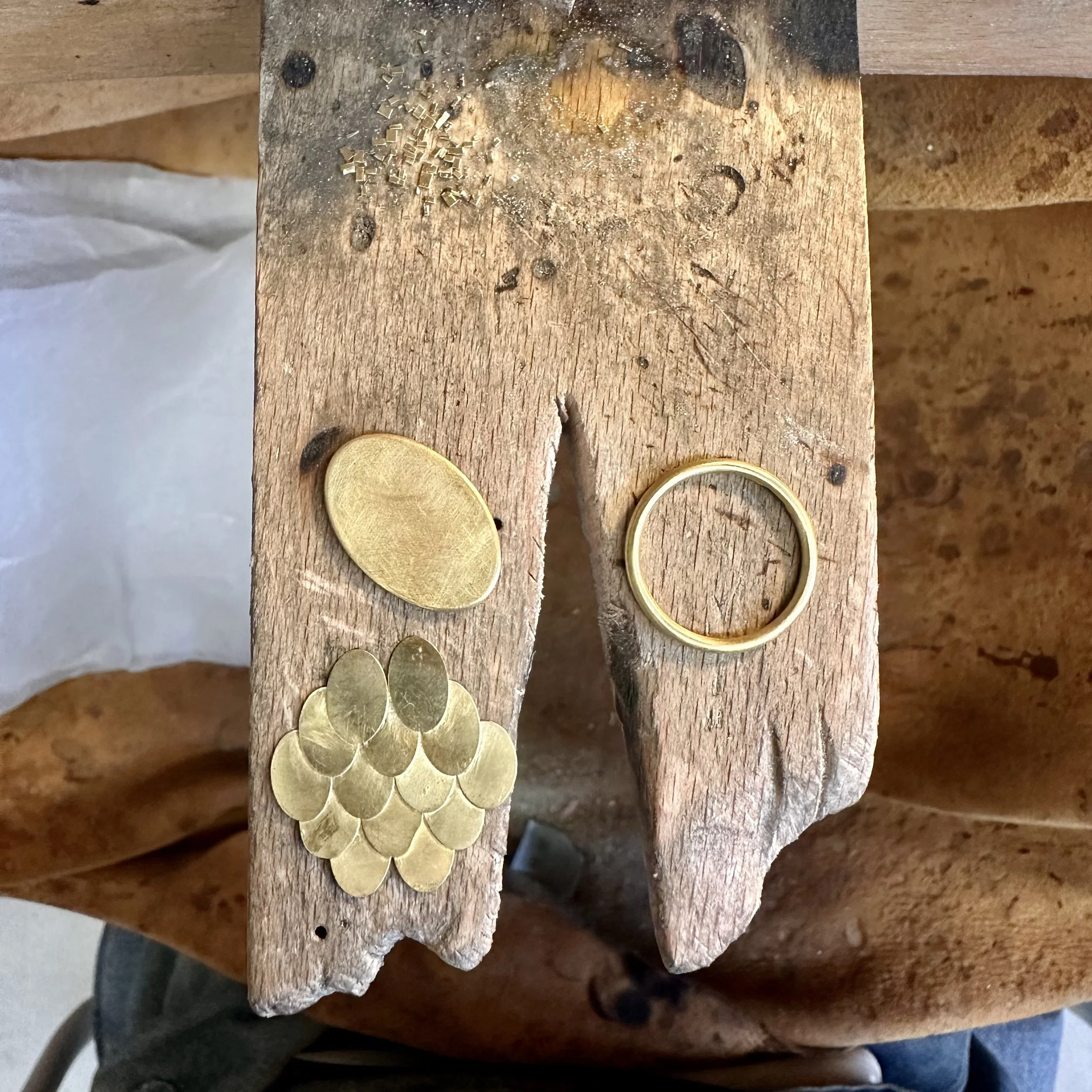
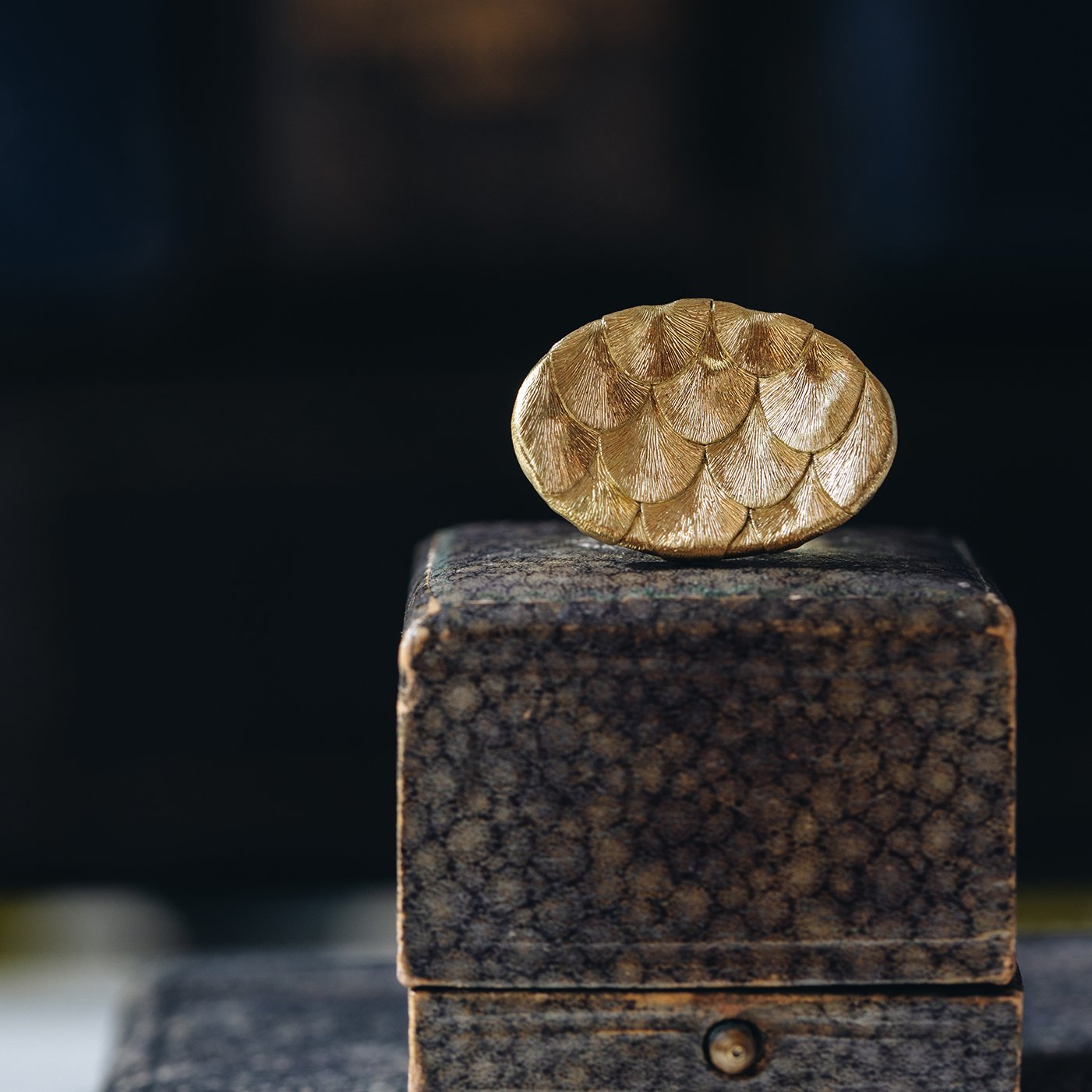
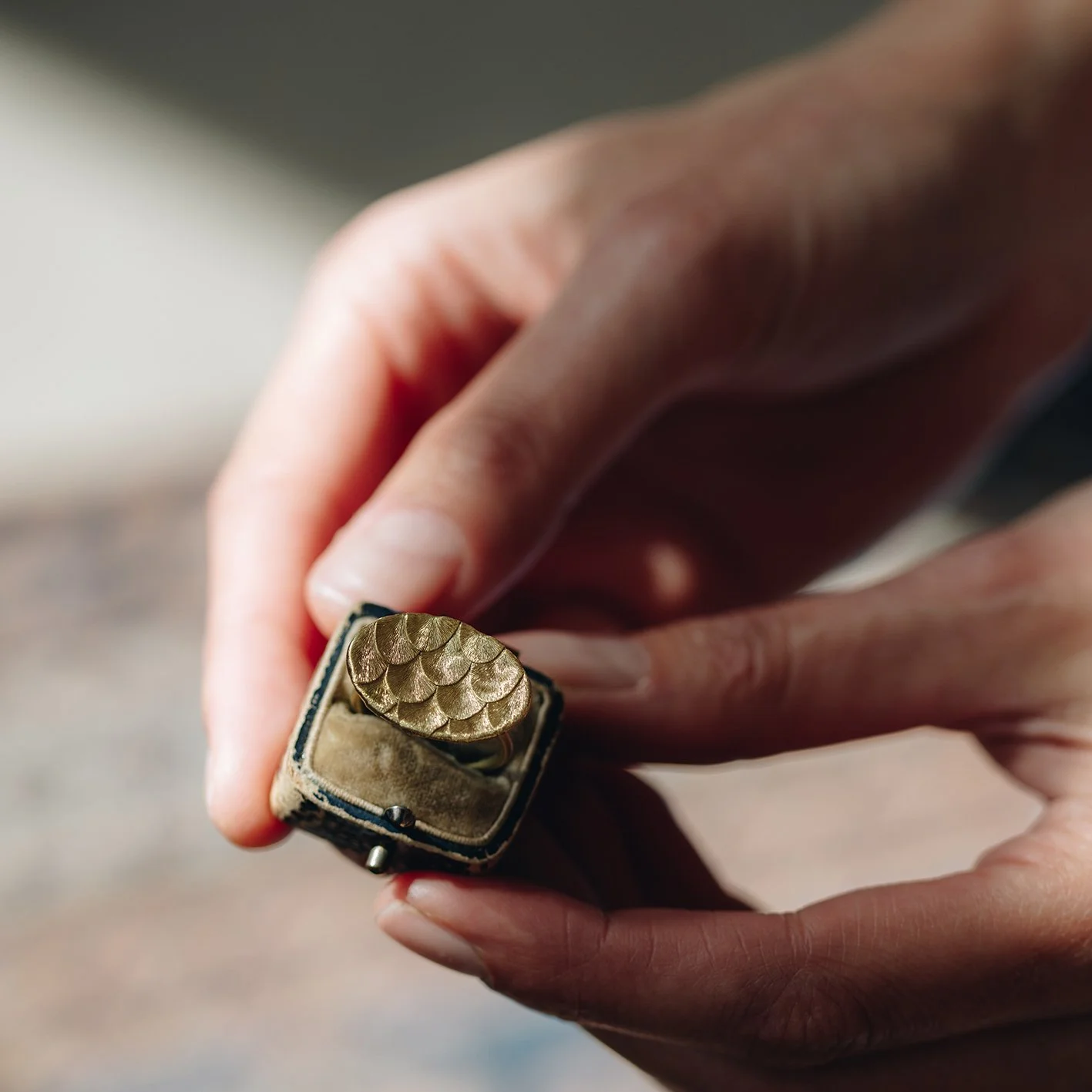
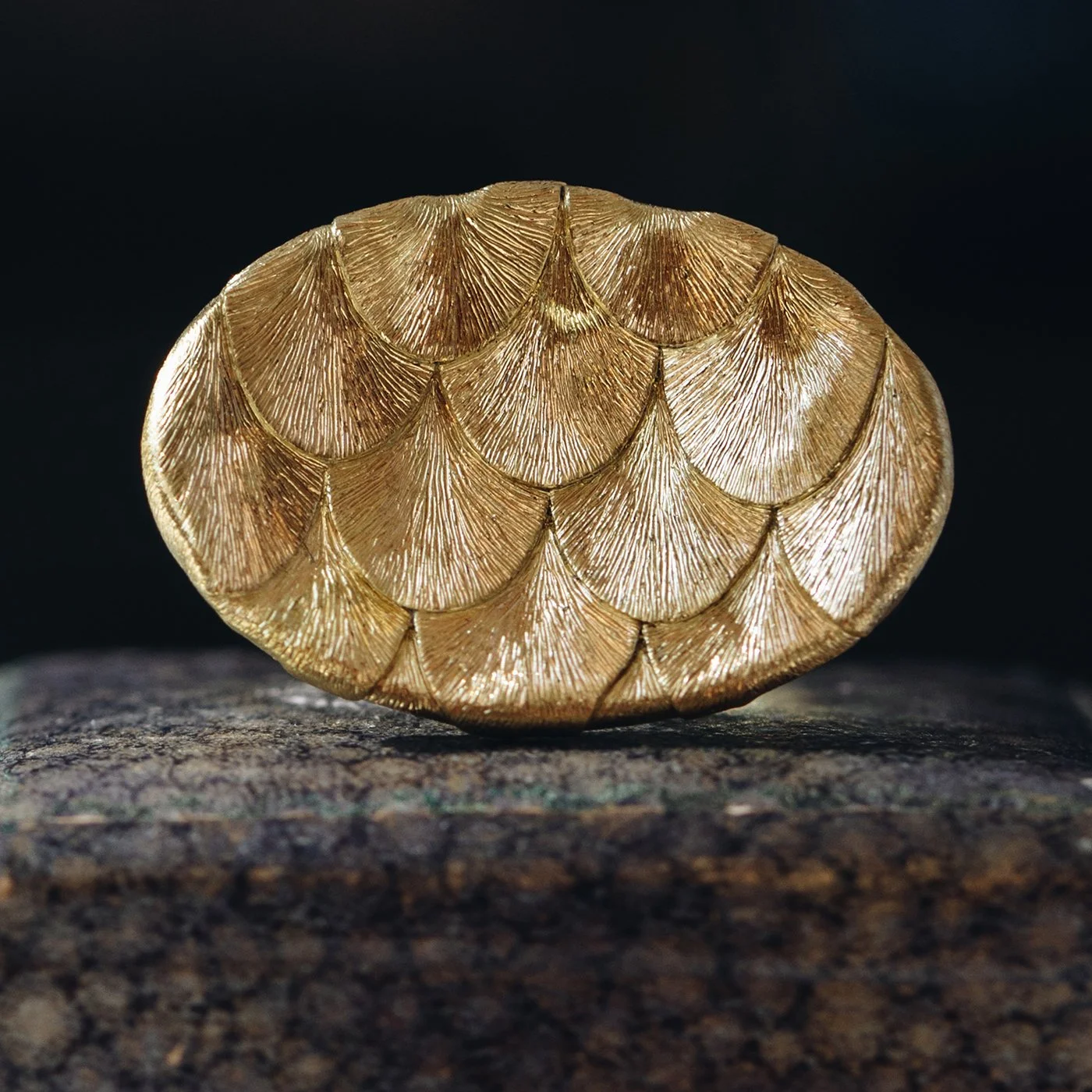
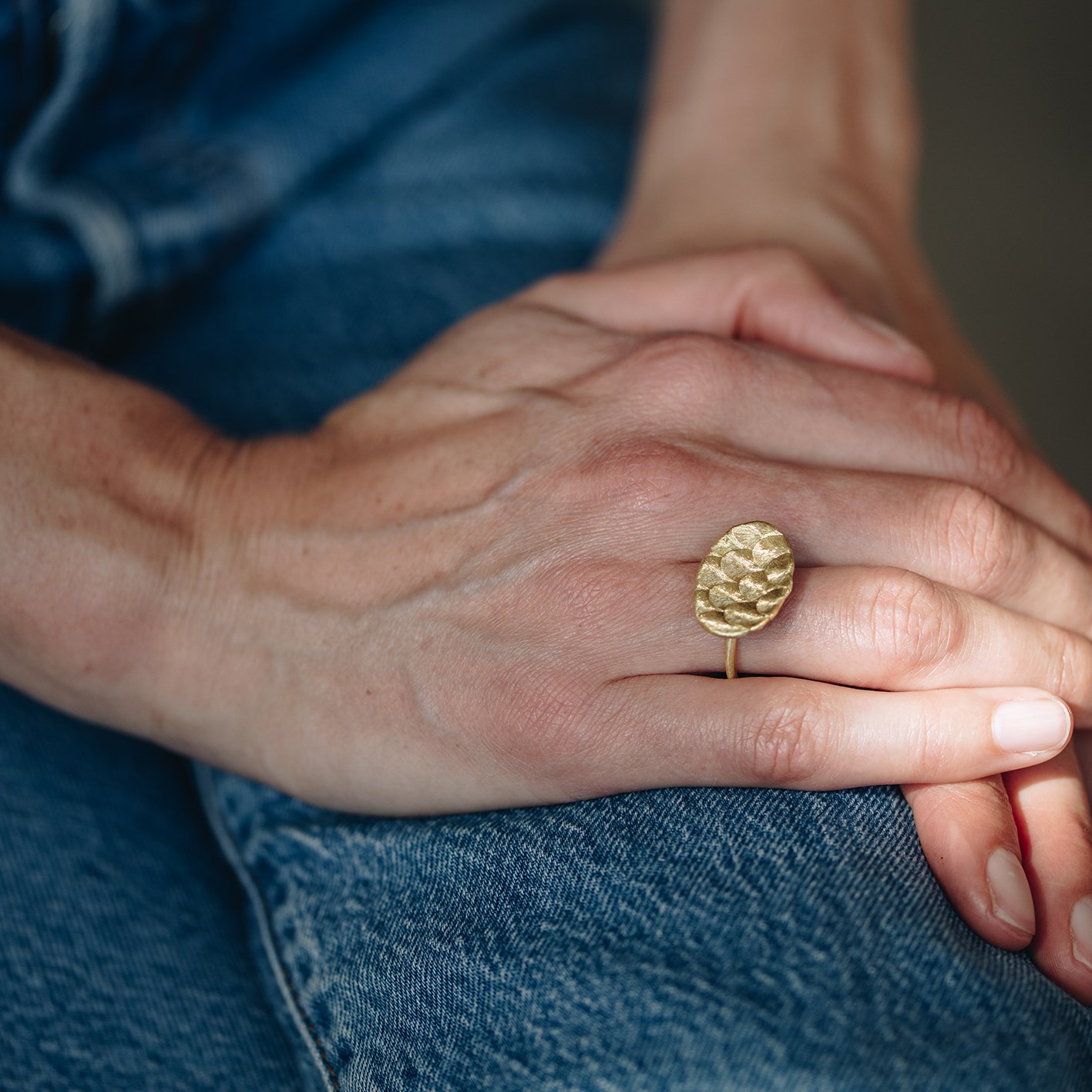
Each element was then formed and soldered into place by hand, gradually creating the structure: a concave oval disc sitting above a gold band, covered in overlapping, petal-like forms.
Then came the engraving.
The process of engraving takes time, focus and concentration. I wanted the ring to incorporate the technique I had been learning, but also to speak about the place I had learned it in and the time it had taken to get there.
The engraved pattern builds across the surface, each line catching the light. As the ring moves on the hand, the light travels across the engraved marks, much like dappled sunlight moving through the emerging leaves of a woodland canopy. The overlapping forms create layers of pattern and density, somewhere between leaves, petals and the fragments of things found on the forest floor.
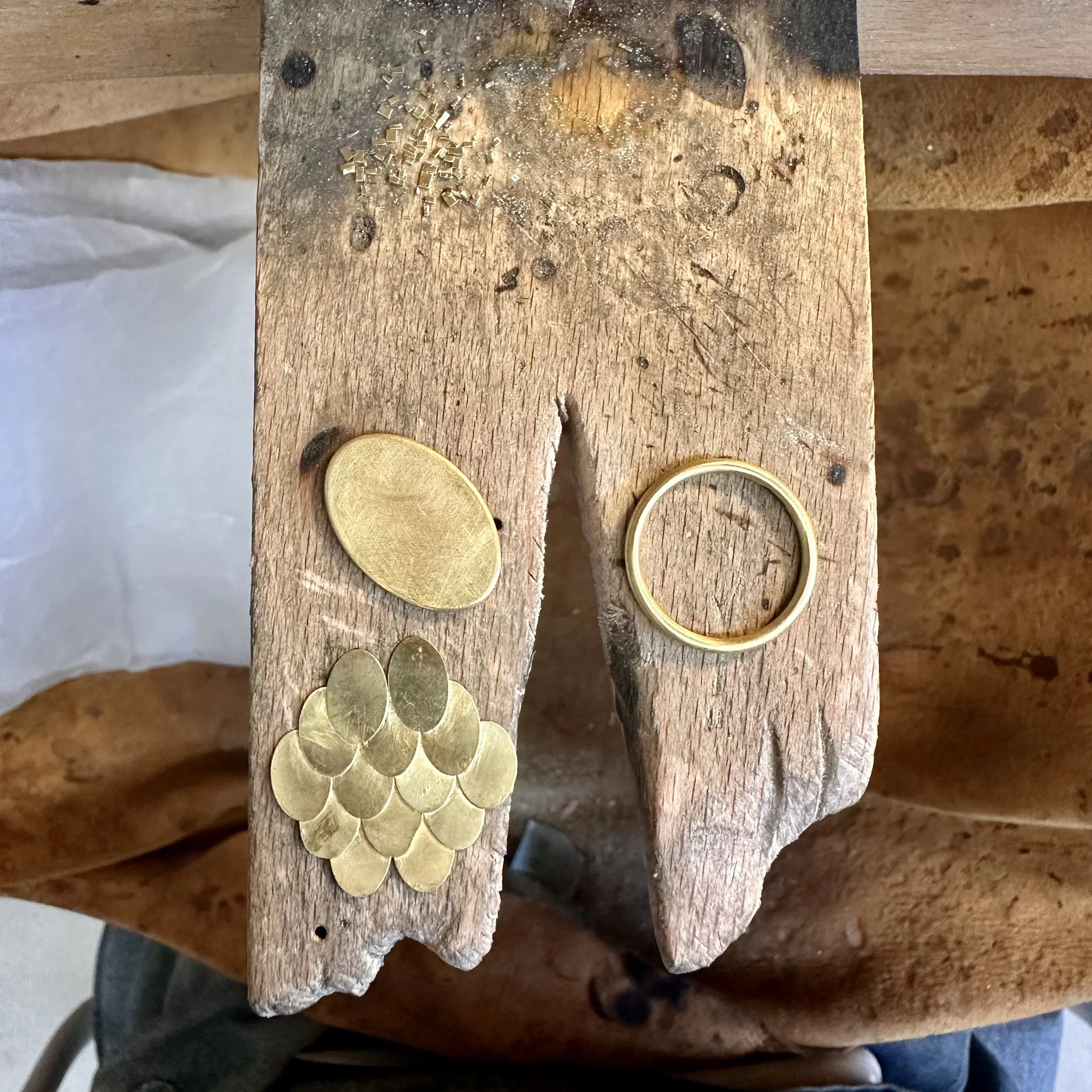
The concave oval is also a direct connection to my time with Malcolm. It echoes the test pieces I made in his workshop while learning the technique, carrying a physical reminder of that period of practice into the finished piece.
I wanted to make something new without leaving my existing visual language behind.
Over the years I have developed a way of working that has become recognisably mine. It has been built through a lifetime of looking, sketching, experimenting and making. One sketchbook idea leads to another; techniques become muscle memory; hands become calloused; mistakes become knowledge. I didn’t want this new experience to take me somewhere completely separate. I wanted it to become another layer.
Perhaps that is what this ring is really about: layers.
The layers of trees and leaves. The layers of pattern and disorder. The layers of place and memory. The layers of skills built over a career. Malcolm’s workshop and my atelier. Perthshire and Dumfriesshire. Spring moving into summer. The journey there and back. The time spent making, and the time spent thinking.
We get so much rain here in Scotland that moments of sunshine can feel particularly precious. I became very aware of the changing light in my own atelier as the months passed — sunlight coming through the trees outside the window, leaving moving shadows across the room, catching the anvil as I worked.
There is something particularly satisfying about making a piece using a material that comes from the same landscape that has been occupying your thoughts. The Scottish gold creates a tangible connection to this place. The engraving connects me to another place in Scotland, and to the person who taught me how to do it.
And then there is the question I am often asked: how long did it take to make?
It is one of the hardest questions to answer.
There are the hours and days at the workbench. There is the time spent refining the gold, forming every element, soldering, engraving. There are the hours of practice that came before it.
But there is also the lifetime of thought behind it. The skills accumulated over a career. The trial and error. The things I have looked at and absorbed without even realising it. The muscle memory in my hands. The ideas that have been slowly developing from one sketchbook to the next.
Time is woven into every part of it.
This one-of-a-kind ring is a record of a period of transition for me — of learning something new while remaining rooted in where I have come from. Of travelling between places, seasons and ways of working. Of trying to loosen my instinct for order just enough to let something unexpected into it.
And perhaps, most importantly, of being present in a particular time and place: among the trees, travelling the roads between home and Malcolm’s workshop, learning, practising and making.
A rare material, a new skill, a familiar visual language — all layered together in one piece.
My opportunity to learn engraving with Malcolm Appleby was made possible through the Business Catalyst (Large) Grant from the Goldsmiths Centre funded by the Goldsmiths Foundation.