The Final Chapter of My Engraving Tuition
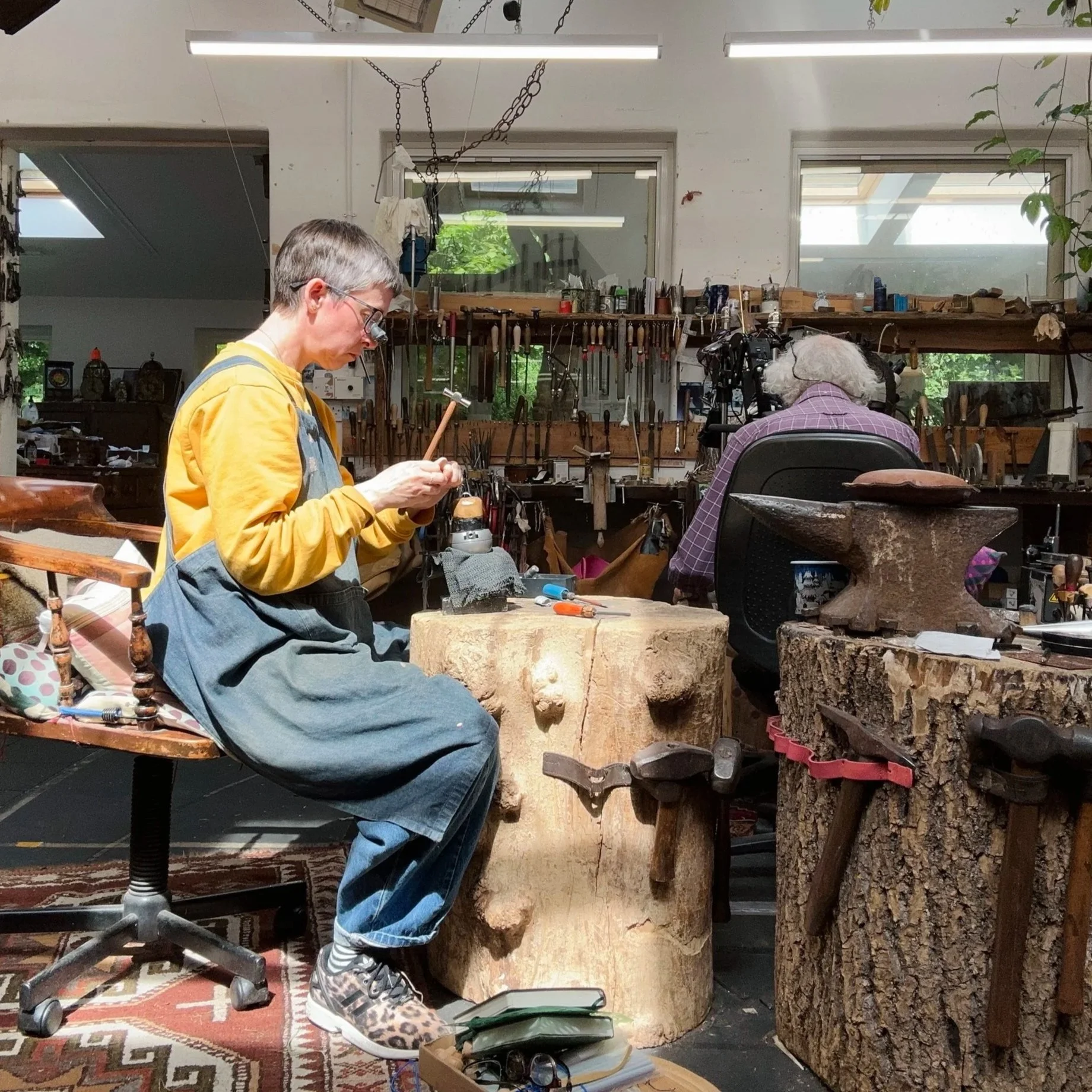
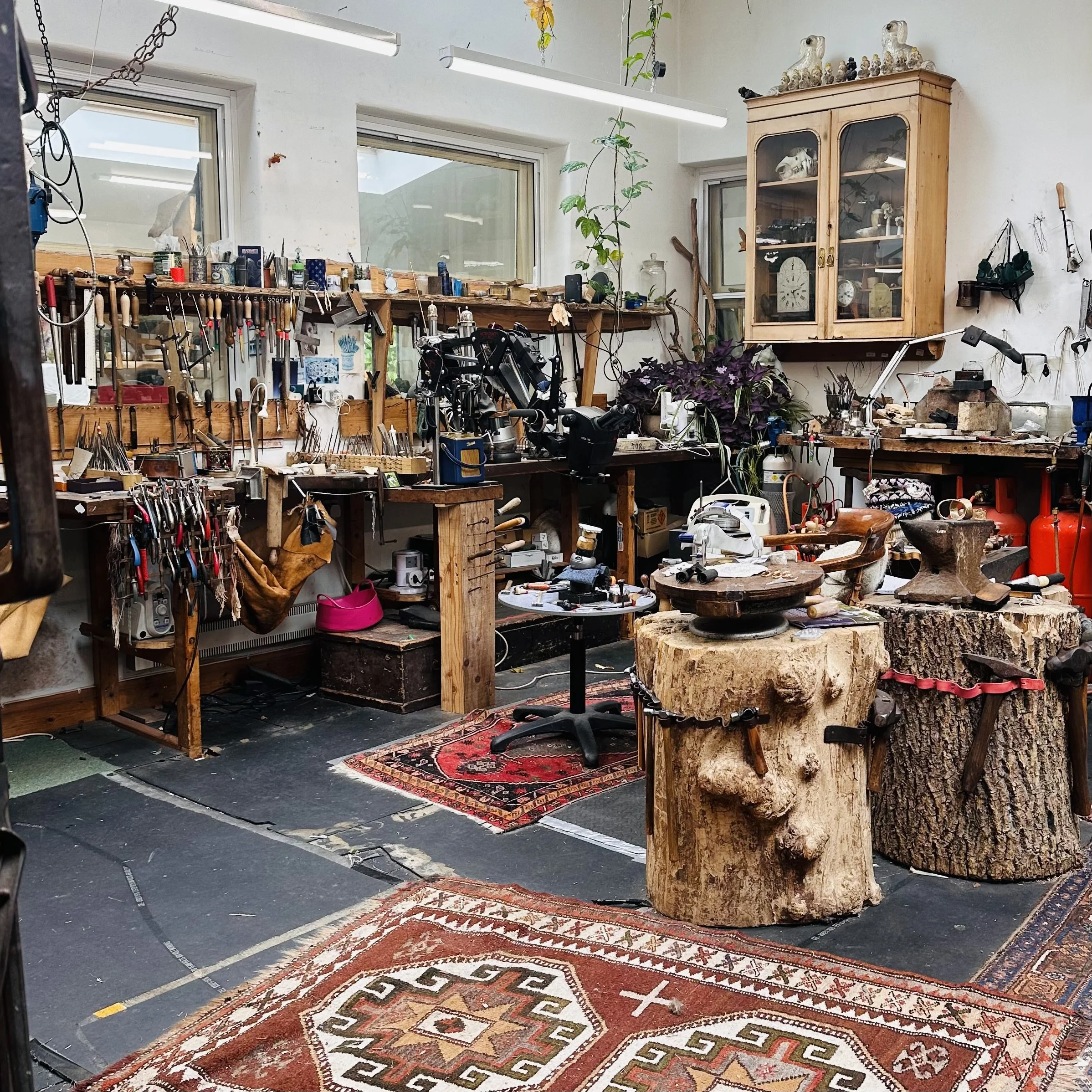
Malcom and I both working on our own projects in his workshop
Yesterday marked my seventh and final day of engraving tuition with Malcolm Appleby.
Over the past few months I've travelled north to Highland Perthshire every fortnight, returning to Aultbeag with pages of questions, pieces to practise and, gradually, a growing understanding of engraving. Between each visit I've returned to my own atelier in Dumfriesshire to spend two weeks practising before taking the next step.
That rhythm has become part of the learning. Just enough time to wrestle with a new technique, discover where I'm struggling, and arrive back with fresh questions.
The landscape has quietly marked the passing of those weeks too.
When I first travelled north, the trees were still bare. As spring unfolded, the hedgerows thickened, leaves unfurled and the garden at Aultbeag slowly filled with colour. Yesterday, as I left after my final session, it felt fitting that the garden was at its fullest; abundant, layered and humming with life.
Before I left, Malcolm took me on a walk through the garden to inspire the final piece of the project.
He refers to this final work as a "masterpiece", using the word in its original sense. Historically, a masterpiece was the piece created at the end of an apprenticeship with a master craftsperson to demonstrate what had been learned, rather than meaning the finest work of someone's career. I have to admit I much prefer that definition. It certainly takes some of the pressure off.
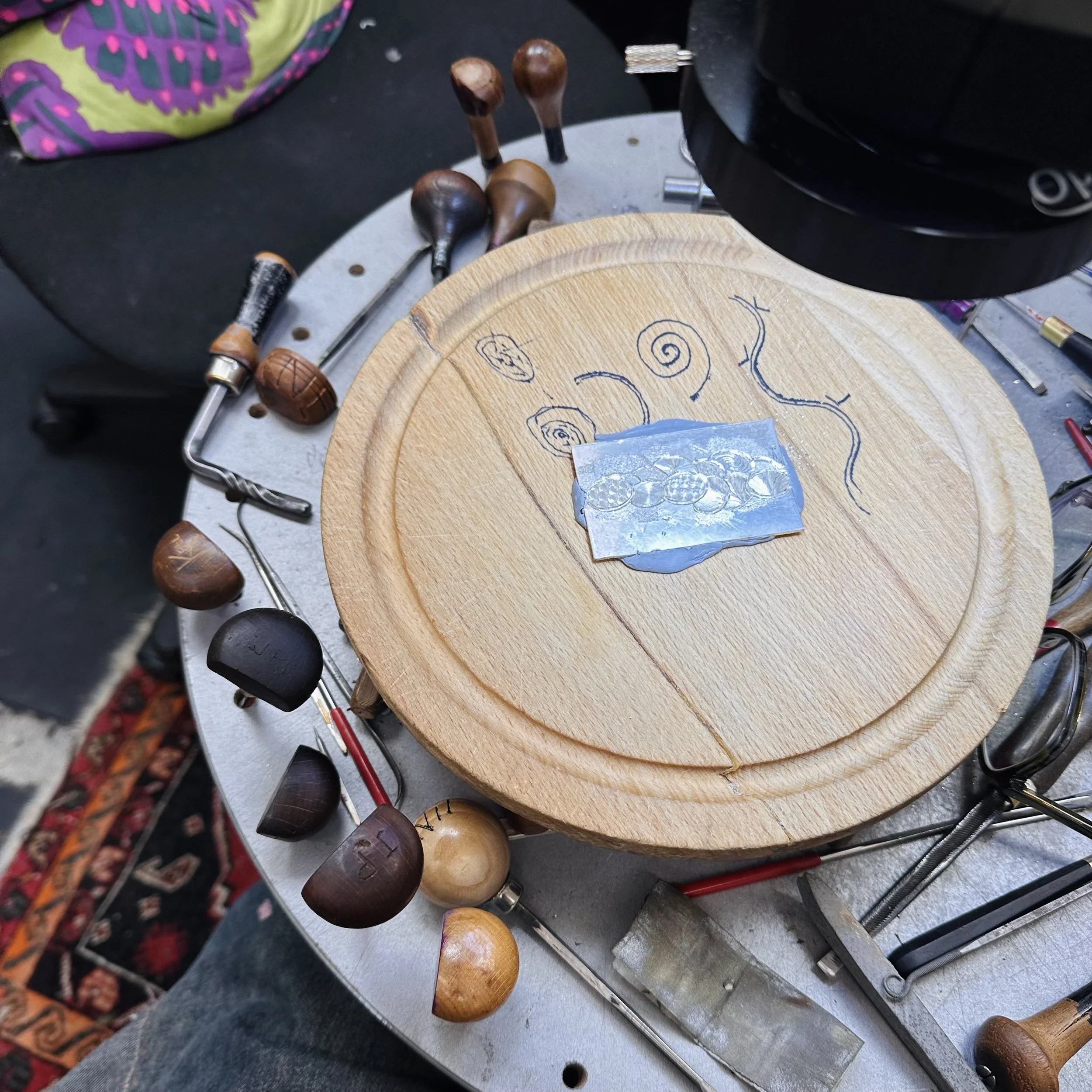
I've already begun experimenting for this final piece, although I don't yet know exactly where it will lead. That's perhaps the most exciting stage; when ideas are still fluid and you're simply following threads to see where they take you.
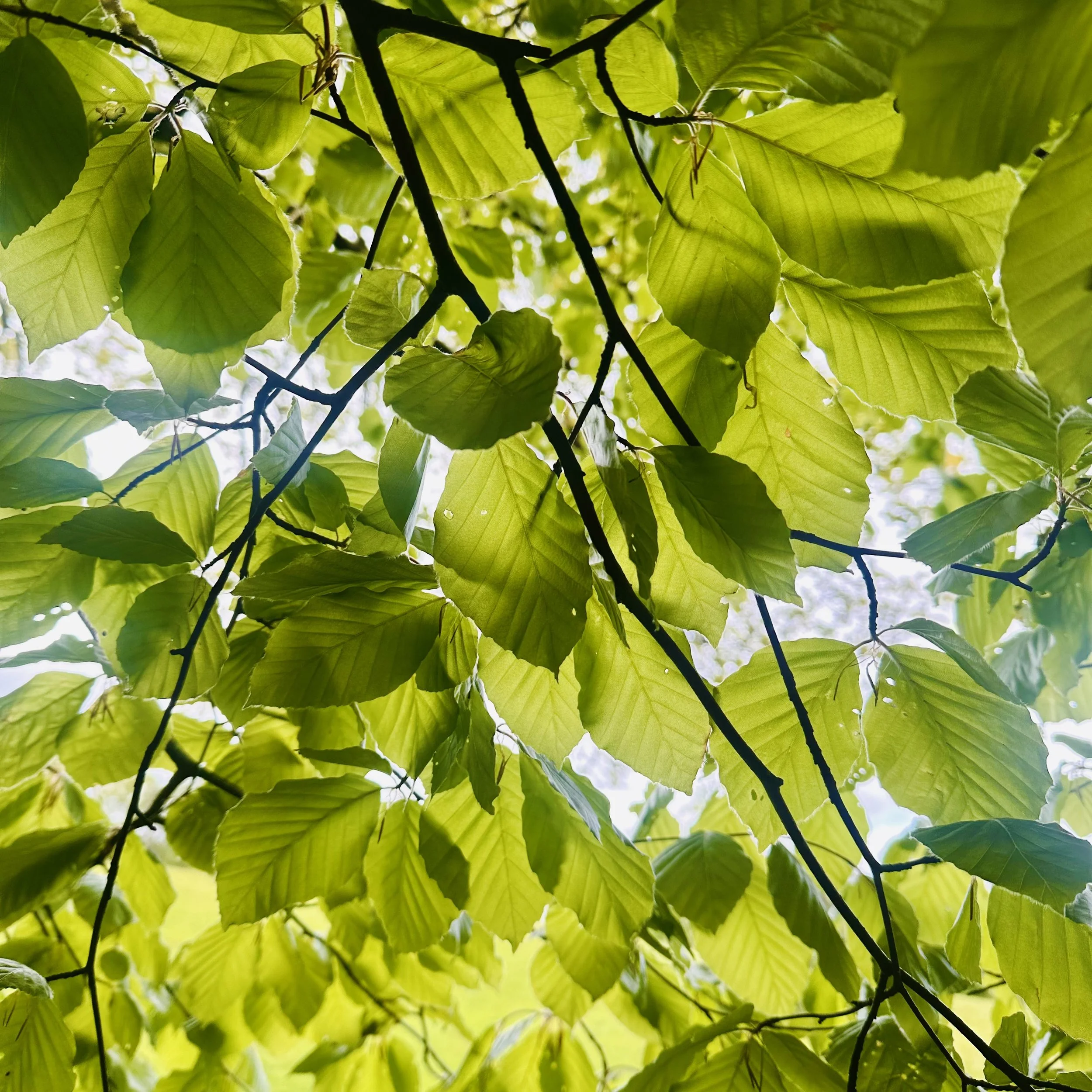
Over the past few months I've found myself looking at trees differently.
I've watched leaves emerge on my journeys between Dumfriesshire and Aberfeldy, noticing how quickly bare branches become impossibly full. I've been drawn to the busyness of hedgerows, where one plant tumbles into another, rhythms overlap and nothing feels too ordered.
That sense of organised chaos has begun finding its way into my sketchbooks.
Much of my own work has always been built around pattern and repetition, carefully balanced and considered. Lately I've been wondering what happens if I loosen that rhythm. What happens if patterns become less predictable, if they begin to echo the layered complexity found in nature?
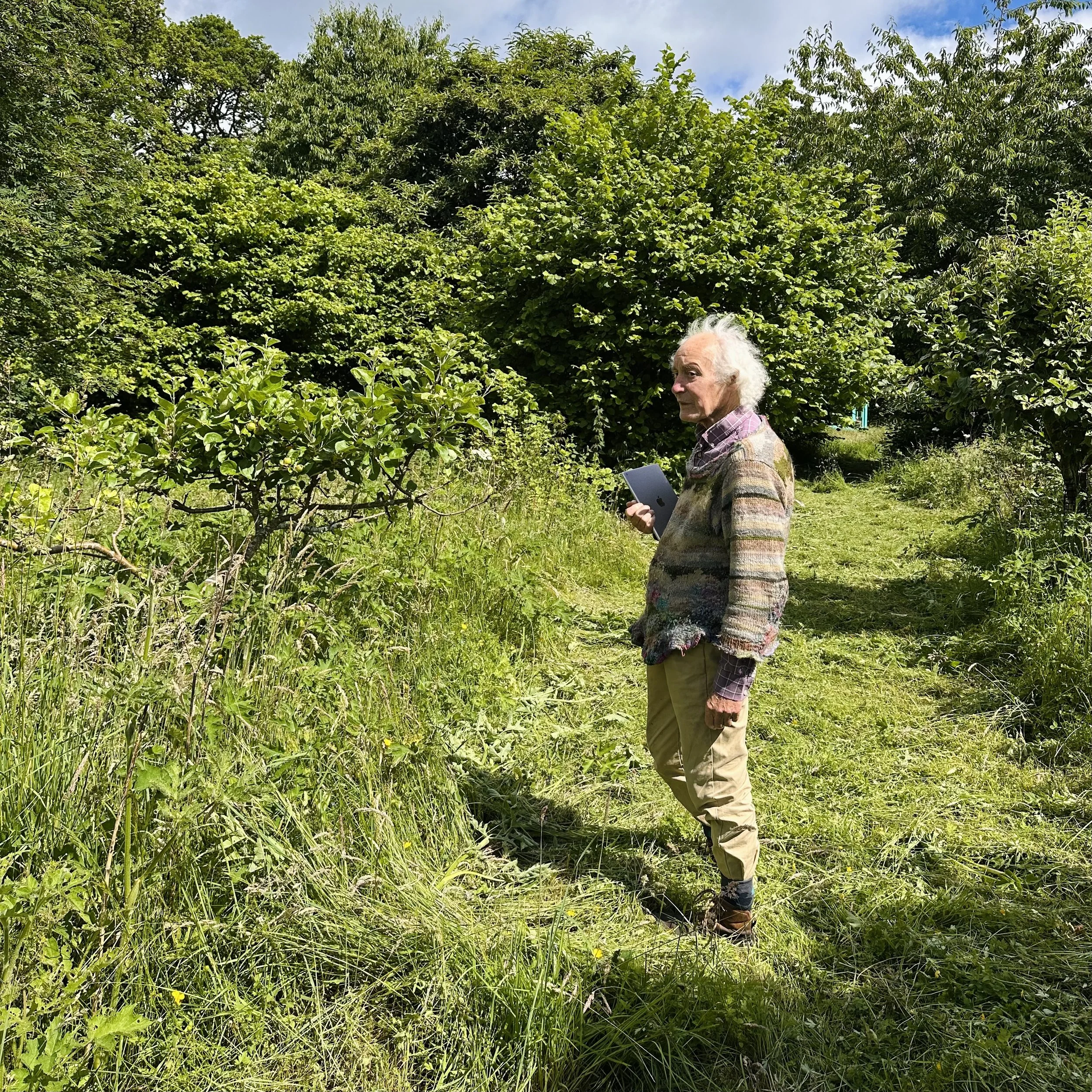
Malcolm in his garden at Aultbeag
Ideas have started to unfurl in my sketchbook much like the leaves themselves; slowly evolving through drawing, making, conversations and quiet observation. I'm allowing myself time to live with them before deciding where they belong.
I'm hoping the finished piece will be ready to show for the first time at Goldsmiths' Fair in September, where it will represent the beginning of this next chapter in my work.
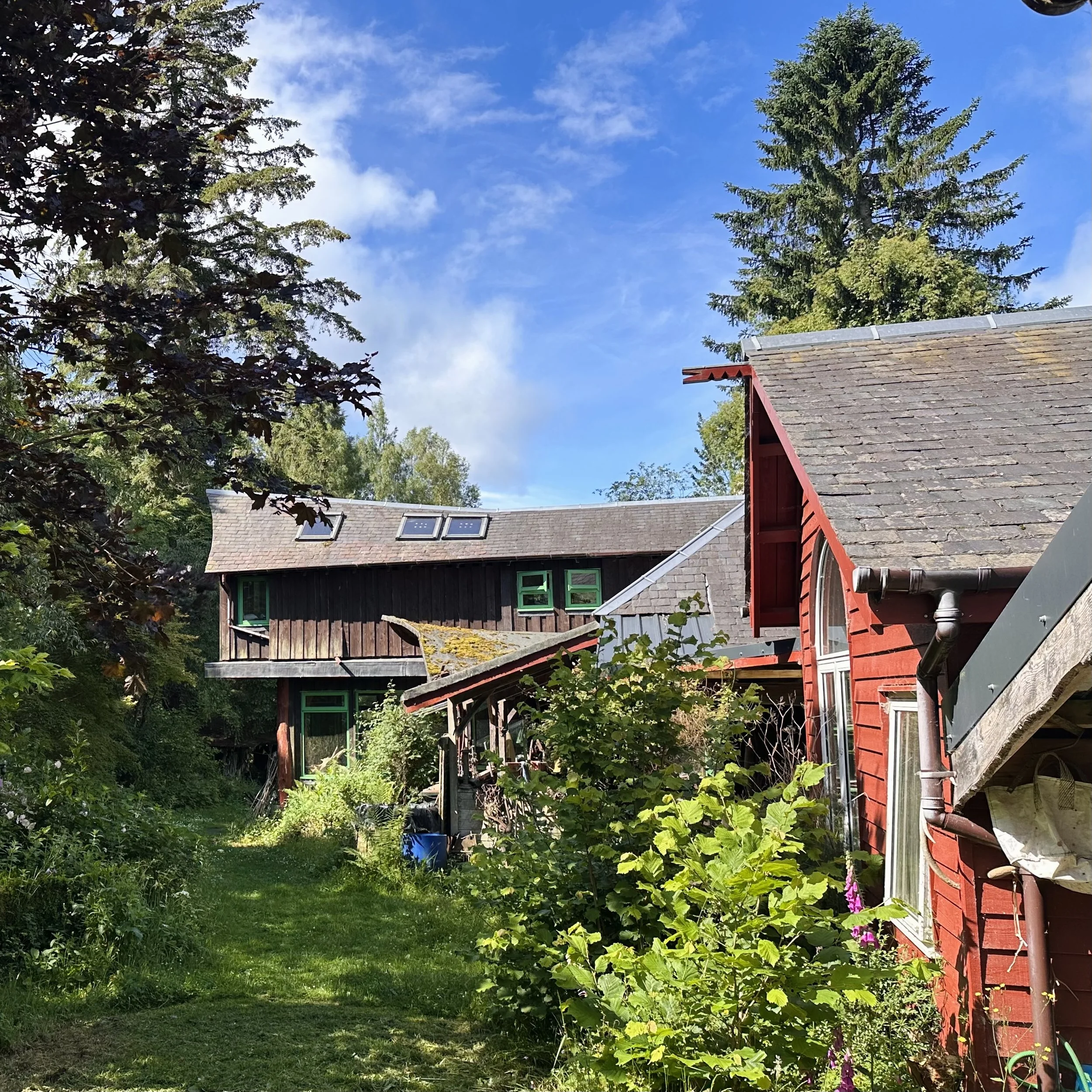
Malcolm's garden says a great deal about the way he sees the world.
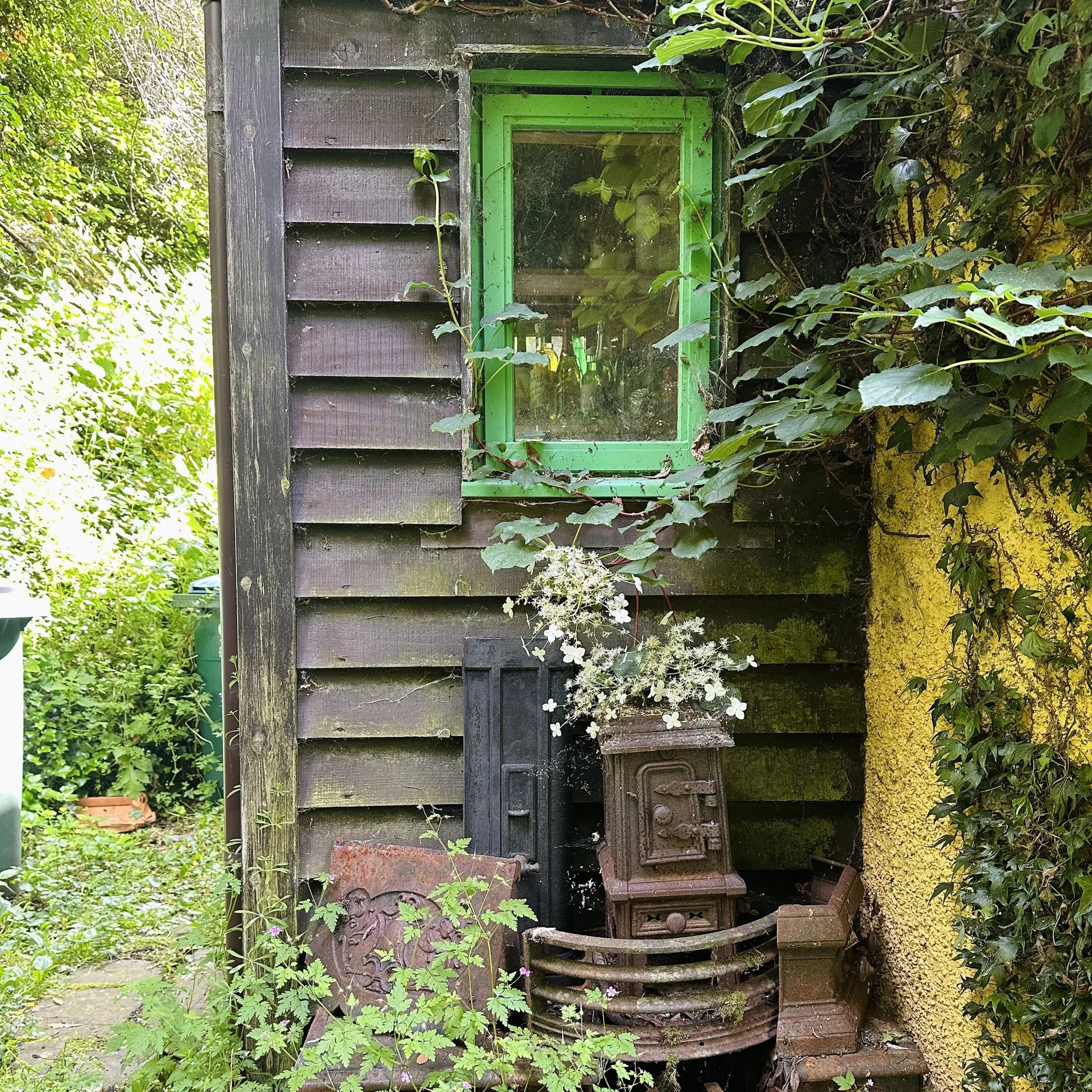
He is passionate about creating habitats for wildlife, particularly butterflies and moths, allowing plants to find their own place rather than imposing rigid order. Roses scramble through neighbouring shrubs, grasses are left long, wildflowers weave between established planting, trees are carefully chosen while others are simply allowed to seed themselves. Around every corner there are unexpected combinations, hidden pathways and quiet surprises.
It's wonderfully, charmingly chaotic.
You quickly realise that his surroundings and his engraving are inseparable. This week, while I worked at the next bench, Malcolm was engraving a leaf he had picked from the garden only moments before. Inspiration moves so naturally between the landscape and his work.
Watching him work has been as valuable as the formal teaching.
His workshop, much like the garden outside, is full of activity. Every bench holds tools that have evolved over decades of use. The steady ticking of countless clocks forms the soundtrack while he moves effortlessly between projects. As we work side by side, I'm able to ask why he has reached for one tool rather than another, or how a particular effect has been achieved, then later hold the finished piece in my own hands.
As my understanding of engraving has grown, so too has my appreciation of Malcolm's work. Processes that once felt mysterious now begin to reveal themselves. I find myself noticing tiny details that I simply wouldn't have recognised a few months ago.
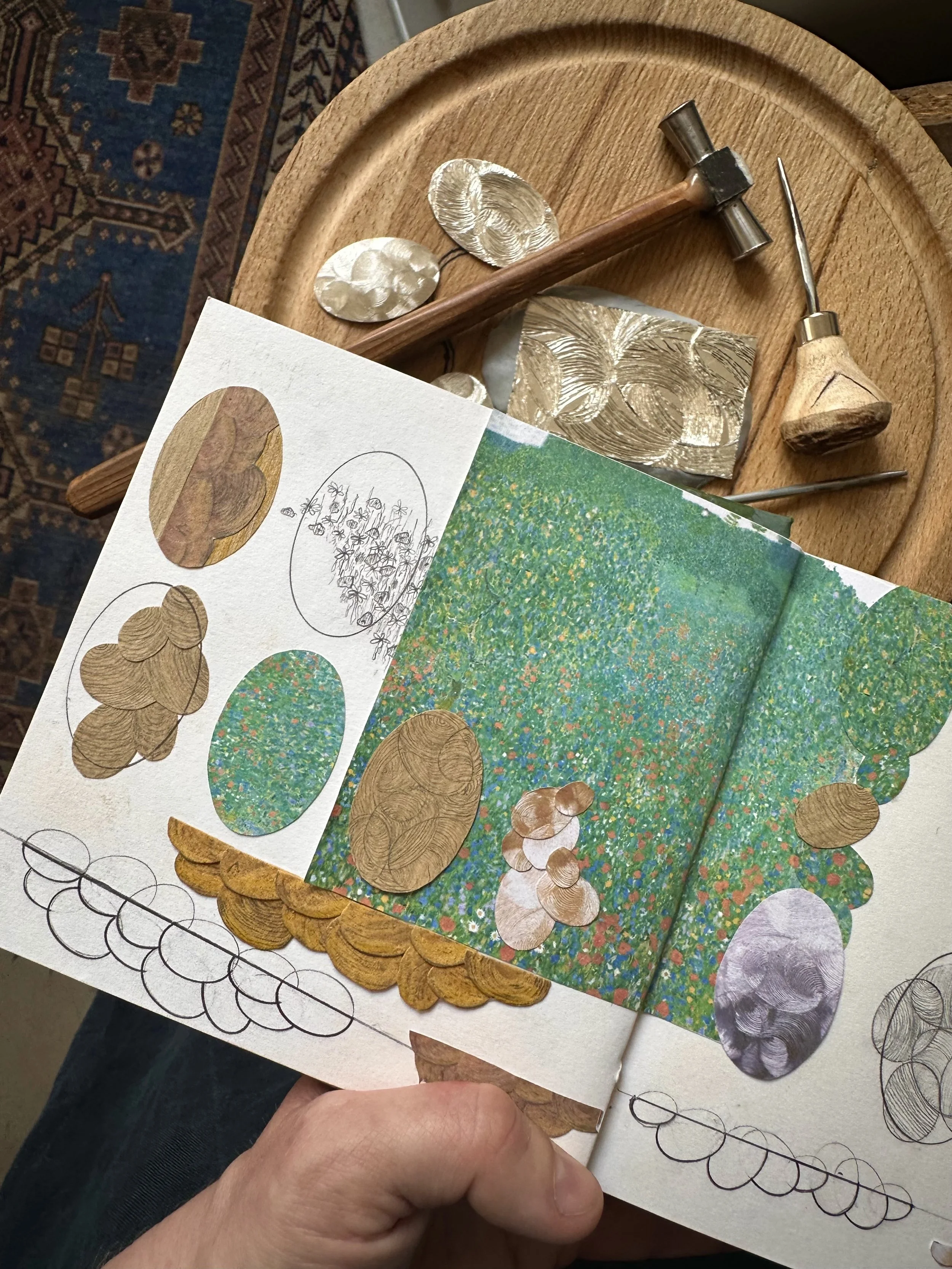
Sketchbook thoughts
Learning to engrave has been both humbling and exhilarating.
Hammer and chisel engraving has certainly tested me. Malcolm knows I find it challenging, so we've spent a great deal of time working on it. There have been moments where nothing seemed to go quite right, but one of the most valuable lessons has been understanding that sometimes the answer isn't to persist with the same approach. Occasionally changing the tool, or even the angle I'm holding it at, completely transforms the result.
I've especially enjoyed the incredibly fine work under the microscope.
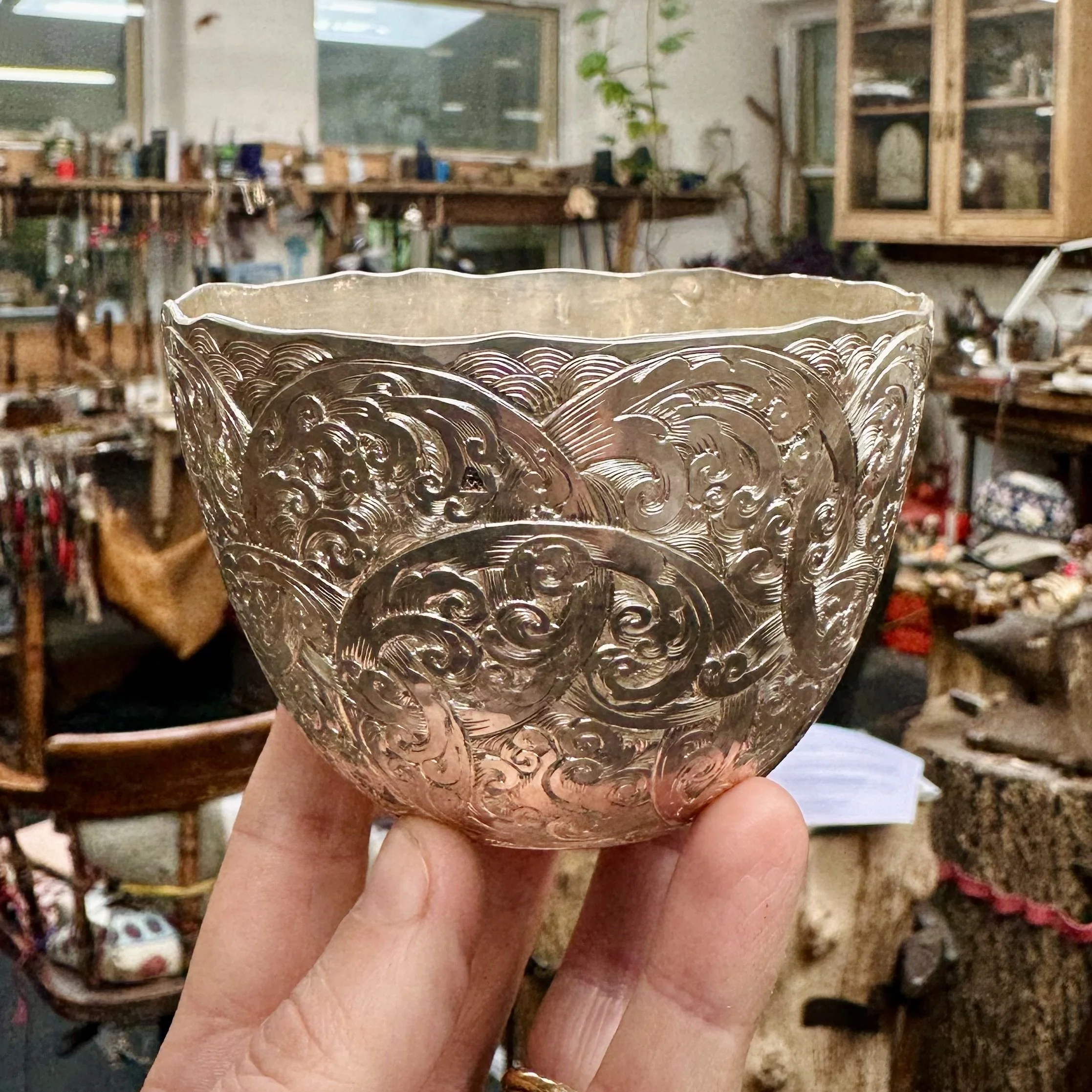
What fascinates me most is the way engraving plays with light. A pattern can appear deceptively simple until it catches the light and suddenly comes alive. The smallest change in the direction of a cut creates an entirely different effect. Tiny decisions make extraordinary differences.
I've also been exploring engraved textures; some intended as backgrounds, others interesting enough to stand entirely on their own. Those experiments have opened up possibilities I hadn't considered before.
Another unexpected highlight has been learning to make my own gravers. Being able to shape and modify tools specifically for the marks I want to create feels like an important step, and one I can already see influencing my future work.
I've loved being a student again.
There's something deeply satisfying about returning to the beginner's mindset, allowing yourself to feel uncertain, to ask questions and occasionally to feel completely lost. It's easy, when running your own business, to spend every day relying on the skills you already have. Stepping outside that comfort zone has reminded me how valuable it is to keep learning.
Balancing the training alongside commissions and running the atelier hasn't always been easy, but I was determined to make the most of this opportunity.
None of it would have been possible without the Business Catalyst (Large) Grant from the Goldsmiths' Centre, funded by the Goldsmiths' Foundation. Supporting the continuation of hand skills feels more important than ever, and I'm incredibly grateful that organisations like these are investing in traditional craft and helping ensure these techniques continue to evolve rather than disappear.
Although yesterday marked the end of this chapter, it certainly doesn't feel like an ending.
The final masterpiece is only just beginning, and beyond that I'm excited to see how engraving gradually becomes woven into my own practice.
This winter I'll begin the second part of my grant, learning rub-over stone setting with Inness Thomson. For now though, I'm looking forward to spending time at my own bench, experimenting, making and allowing these new ideas to quietly find their place.